

光照贴图(Lighting Maps)引入原因
基础材质系统存在局限性:单个物体仅对应一套材质参数(固定材质颜色、光源属性、高光参数),整个物体只能呈现统一的光照视觉效果,无法模拟现实物体局部材质不同、光影效果不同的真实表现。 光照贴图解决方案:通过贴图纹理采样,让物体不同位置的像素/片元读取不同的光照参数,实现同一物体多材质、局部差异化光影效果,大幅提升渲染真实度。
光照贴图与 sampler2D 原理
- 光照贴图本质属于纹理资源,存储在
sampler2D中,sampler2D对应显卡纹理单元编号,每个纹理单元绑定一张贴图。 sampler2D是 GPU 硬件底层资源,无法在着色器中随意实例化,必须由 CPU 通过uniform变量传递 至 GPU。- 贴图属于全局渲染资源,不属于单个顶点、单个片元私有数据,因此
sampler2D变量必须定义为uniform类型。
环境光贴图规则
在真实渲染中,物体的环境光颜色几乎与漫反射颜色保持一致,因此可以直接移除材质结构体中独立的环境光颜色定义,复用漫反射贴图数据,精简材质参数。 若需要单独保留环境光颜色:环境光对物体所有像素的光照强度均匀统一,而贴图是逐像素不一样,所以无法通过贴图采样获取环境光,必须手动单独定义固定颜色。
镜面反射贴图制作原理
可通过 Photoshop、GIMP 等图像工具,基于漫反射纹理快速制作镜面反射纹理:
- 裁剪漫反射贴图,去除不需要镜面高光反射的区域;
- 将图像转为黑白灰度图;
- 调整亮度、对比度,控制高光强度范围。 核心原理:镜面贴图存储的是高光强度数值,而非颜色。镜面高光的最终色彩由光源颜色决定,即使贴图存储彩色信息,也无法得到真实的高光效果,因此统一使用黑白灰度图存储强度。
放射光贴图(自发光贴图)
放射光贴图用于实现物体自发光效果,可以精准控制物体任意片元的发光区域、发光强度,脱离光源照射限制,让物体自身产生光照颜色。
光照方向校正规则
- 光源原始方向:由光源位置指向片元位置。
- 光照计算所需方向:由片元位置指向光源位置。
- 光照计算前必须对方向向量取反,否则光照计算结果完全错误。
方向光与点光源区分规则
向量无位置属性、只有方向,点坐标包含位置属性,可通过齐次坐标 w 分量 快速区分:
- w = 0:纯方向向量,代表方向光(无具体光源位置,只有光照方向)。
- w = 1:空间位置坐标,代表点光源(有具体世界空间位置)。
聚光灯原理与判定规则
聚光灯核心参数
聚光灯由三个核心参数定义:世界空间光源位置、直射方向向量、切光角(光照锥形边界与直射方向的夹角)。
片元光照范围判定
- 计算光源指向当前片元的光照方向向量;
- 将光照方向与聚光灯直射方向做点积运算,得到夹角余弦值;
- 对比余弦值与切光角余弦值:若数值更大,代表片元处于光照锥形范围外,不接收光照。
手电筒(相机聚光灯)特殊实现
手电筒是绑定相机的特殊聚光灯:
- 光源位置 = 相机世界位置;
- 光照直射方向 = 相机视线朝向;
- 光照位置与朝向会随相机移动、视角转动实时更新。
聚光灯双层锥体衰减机制
点光源仅存在距离衰减(距离越远光照越弱);聚光灯额外拥有锥形范围衰减,通过内外双层锥体实现平滑光影过渡:
- 内锥体内部:光照强度 = 1.0,无衰减,光照效果最强;
- 外锥体外部:光照强度 = 0.0,完全无光照;
- 内外锥体之间:光照强度线性插值过渡,避免光照边界生硬锯齿,实现柔和光影渐变。
example1: 使用漫反射贴图
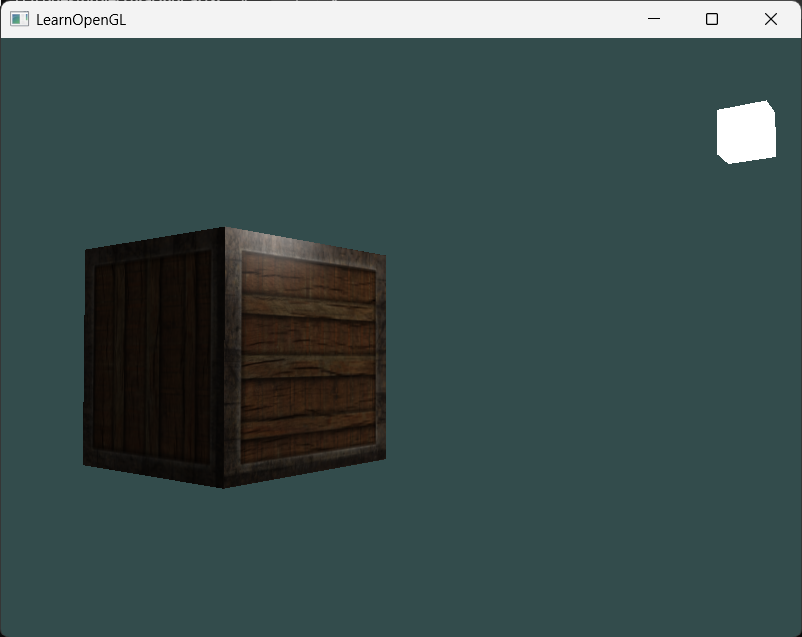
贴图的加载和使用与纹理类似:图片内容都存在纹理单元里,并使用一个sampler2D的变量指向这个纹理单元。sampler2D类型的变量都需要定义为uniform全局变量,并在C++代码中传递。都使用texture函数采样得到像素值。
//vertexShader//新增了纹理坐标的顶点着色器#version 330 corelayout (location = 0) in vec3 aPos;layout (location = 1) in vec3 aNormal;layout (location = 2) in vec2 aTexcoords;
out vec3 worldPos;out vec3 normal;out vec2 Texcoords;
uniform mat4 model;uniform mat4 view;uniform mat4 project;void main(){ gl_Position=project*view*model*vec4(aPos,1.0); worldPos=vec3(model*vec4(aPos,1.0)); normal = mat3(transpose(inverse(model)))*aNormal; Texcoords=aTexcoords;}//fragmentShader//材质结构体中的diffuse改为sampler2D类型,删除单独定义的环境光颜色//漫反射颜色和环境光颜色都从漫反射贴图中采样#version 330 corestruct Material{ sampler2D diffuse; vec3 specular; float shininess;};struct Light{ vec3 lightPos; vec3 ambient; vec3 diffuse; vec3 specular;};in vec3 worldPos;in vec3 normal;in vec2 Texcoords;uniform Material material;uniform Light light;uniform vec3 viewPos;out vec4 FragColor;void main(){ vec3 ambient = light.ambient*texture(material.diffuse,Texcoords).rgb;
vec3 worldNormal=normalize(normal); vec3 worldLightDir=normalize(light.lightPos-worldPos); float diff=max(dot(worldNormal,worldLightDir),0.0); vec3 diffuse=diff*texture(material.diffuse,Texcoords).rgb*light.diffuse;
vec3 worldViewDir=normalize(viewPos-worldPos); vec3 reflectDir=reflect(-worldLightDir,worldNormal); float spec=pow(max(dot(worldViewDir,reflectDir),0.0),material.shininess); vec3 specular=spec*material.specular*light.specular;
FragColor = vec4(ambient+diffuse+specular,1.0);}#define STB_IMAGE_IMPLEMENTATION#include <glad/glad.h>#include <GLFW/glfw3.h>#include <stb_image.h>#include<iostream>#include <glm/glm.hpp>#include <glm/gtc/matrix_transform.hpp>#include <glm/gtc/type_ptr.hpp>
#include <myShader.h>#include <myCamera.h>
using namespace std;
const unsigned int SCR_WIDTH = 800;const unsigned int SCR_HEIGHT = 600;
Camera camera(glm::vec3(0.0f, 0.0f, 3.0f));bool firstMove = true;float lastX = SCR_WIDTH / 2.0f;float lastY = SCR_HEIGHT / 2.0f;float lastFrame = 0.0f, deltaTime = 0.0f;
glm::vec3 lightPos(1.2f, 1.0f, 2.0f);
void framebuffer_size_callback(GLFWwindow* window, int width, int height) { glViewport(0, 0, width, height);}void mouseMove_callback(GLFWwindow* window, double xpos, double ypos) { if (firstMove) { lastX = static_cast<float>(xpos); lastY = static_cast<float>(ypos); firstMove = false; } float xoffset = static_cast<float>(xpos) - lastX; float yoffset = lastY - static_cast<float>(ypos); lastX = static_cast<float>(xpos); lastY = static_cast<float>(ypos); camera.ProcessMouseMovement(xoffset, yoffset);}void mouse_scroll_callback(GLFWwindow* windwo, double xoffset, double yoffset) { camera.ProcessScroll(static_cast<float>(yoffset));}void processInput(GLFWwindow* window) { if (glfwGetKey(window, GLFW_KEY_ESCAPE) == GLFW_PRESS) { glfwSetWindowShouldClose(window, true); } if (glfwGetKey(window, GLFW_KEY_W) == GLFW_PRESS) { camera.ProcessKeyboard(FORWARD, deltaTime); } if (glfwGetKey(window, GLFW_KEY_S) == GLFW_PRESS) { camera.ProcessKeyboard(BACKWARD, deltaTime); } if (glfwGetKey(window, GLFW_KEY_A) == GLFW_PRESS) { camera.ProcessKeyboard(LEFT, deltaTime); } if (glfwGetKey(window, GLFW_KEY_D) == GLFW_PRESS) { camera.ProcessKeyboard(RIGHT, deltaTime); }}unsigned int loadTexture(const char* path) { unsigned int texture; glGenTextures(1, &texture); glBindTexture(GL_TEXTURE_2D, texture); glTexParameteri(GL_TEXTURE_2D, GL_TEXTURE_WRAP_S, GL_REPEAT); glTexParameteri(GL_TEXTURE_2D, GL_TEXTURE_WRAP_T, GL_REPEAT); glTexParameteri(GL_TEXTURE_2D, GL_TEXTURE_MIN_FILTER, GL_LINEAR_MIPMAP_LINEAR); glTexParameteri(GL_TEXTURE_2D, GL_TEXTURE_MAG_FILTER, GL_LINEAR);
int width, height, nrChannels; stbi_set_flip_vertically_on_load(true); unsigned char* data = stbi_load("resources/lighting_maps/container2.png", &width, &height, &nrChannels, 0); if (data) { GLenum format; if (nrChannels == 1) { format = GL_RED; } else if (nrChannels == 3) { format = GL_RGB; } else if (nrChannels == 4) { format = GL_RGBA; } glTexImage2D(GL_TEXTURE_2D, 0, format, width, height, 0, format, GL_UNSIGNED_BYTE, data); glGenerateMipmap(GL_TEXTURE_2D); } else { cout << "Failed to load texture" << endl; } stbi_image_free(data); return texture;}
int main() { glfwInit(); glfwWindowHint(GLFW_CONTEXT_VERSION_MAJOR, 3); glfwWindowHint(GLFW_CONTEXT_VERSION_MINOR, 3); glfwWindowHint(GLFW_OPENGL_PROFILE, GLFW_OPENGL_CORE_PROFILE);
GLFWwindow* window = glfwCreateWindow(SCR_WIDTH, SCR_HEIGHT, "LearnOpenGL", NULL, NULL); if (window == NULL) { cout << "Failed to create window" << endl; glfwTerminate(); return -1; } glfwMakeContextCurrent(window); glfwSetFramebufferSizeCallback(window, framebuffer_size_callback); glfwSetInputMode(window, GLFW_CURSOR, GLFW_CURSOR_DISABLED); glfwSetCursorPosCallback(window, mouseMove_callback); glfwSetScrollCallback(window, mouse_scroll_callback);
if (!gladLoadGLLoader((GLADloadproc)glfwGetProcAddress)) { cout << "Failed to load GLAD" << endl; glfwTerminate(); return -1; } glEnable(GL_DEPTH_TEST);
float vertices[] = { // positions // normals // texture coords -0.5f, -0.5f, -0.5f, 0.0f, 0.0f, -1.0f, 0.0f, 0.0f, 0.5f, -0.5f, -0.5f, 0.0f, 0.0f, -1.0f, 1.0f, 0.0f, 0.5f, 0.5f, -0.5f, 0.0f, 0.0f, -1.0f, 1.0f, 1.0f, 0.5f, 0.5f, -0.5f, 0.0f, 0.0f, -1.0f, 1.0f, 1.0f, -0.5f, 0.5f, -0.5f, 0.0f, 0.0f, -1.0f, 0.0f, 1.0f, -0.5f, -0.5f, -0.5f, 0.0f, 0.0f, -1.0f, 0.0f, 0.0f,
-0.5f, -0.5f, 0.5f, 0.0f, 0.0f, 1.0f, 0.0f, 0.0f, 0.5f, -0.5f, 0.5f, 0.0f, 0.0f, 1.0f, 1.0f, 0.0f, 0.5f, 0.5f, 0.5f, 0.0f, 0.0f, 1.0f, 1.0f, 1.0f, 0.5f, 0.5f, 0.5f, 0.0f, 0.0f, 1.0f, 1.0f, 1.0f, -0.5f, 0.5f, 0.5f, 0.0f, 0.0f, 1.0f, 0.0f, 1.0f, -0.5f, -0.5f, 0.5f, 0.0f, 0.0f, 1.0f, 0.0f, 0.0f,
-0.5f, 0.5f, 0.5f, -1.0f, 0.0f, 0.0f, 1.0f, 0.0f, -0.5f, 0.5f, -0.5f, -1.0f, 0.0f, 0.0f, 1.0f, 1.0f, -0.5f, -0.5f, -0.5f, -1.0f, 0.0f, 0.0f, 0.0f, 1.0f, -0.5f, -0.5f, -0.5f, -1.0f, 0.0f, 0.0f, 0.0f, 1.0f, -0.5f, -0.5f, 0.5f, -1.0f, 0.0f, 0.0f, 0.0f, 0.0f, -0.5f, 0.5f, 0.5f, -1.0f, 0.0f, 0.0f, 1.0f, 0.0f,
0.5f, 0.5f, 0.5f, 1.0f, 0.0f, 0.0f, 1.0f, 0.0f, 0.5f, 0.5f, -0.5f, 1.0f, 0.0f, 0.0f, 1.0f, 1.0f, 0.5f, -0.5f, -0.5f, 1.0f, 0.0f, 0.0f, 0.0f, 1.0f, 0.5f, -0.5f, -0.5f, 1.0f, 0.0f, 0.0f, 0.0f, 1.0f, 0.5f, -0.5f, 0.5f, 1.0f, 0.0f, 0.0f, 0.0f, 0.0f, 0.5f, 0.5f, 0.5f, 1.0f, 0.0f, 0.0f, 1.0f, 0.0f,
-0.5f, -0.5f, -0.5f, 0.0f, -1.0f, 0.0f, 0.0f, 1.0f, 0.5f, -0.5f, -0.5f, 0.0f, -1.0f, 0.0f, 1.0f, 1.0f, 0.5f, -0.5f, 0.5f, 0.0f, -1.0f, 0.0f, 1.0f, 0.0f, 0.5f, -0.5f, 0.5f, 0.0f, -1.0f, 0.0f, 1.0f, 0.0f, -0.5f, -0.5f, 0.5f, 0.0f, -1.0f, 0.0f, 0.0f, 0.0f, -0.5f, -0.5f, -0.5f, 0.0f, -1.0f, 0.0f, 0.0f, 1.0f,
-0.5f, 0.5f, -0.5f, 0.0f, 1.0f, 0.0f, 0.0f, 1.0f, 0.5f, 0.5f, -0.5f, 0.0f, 1.0f, 0.0f, 1.0f, 1.0f, 0.5f, 0.5f, 0.5f, 0.0f, 1.0f, 0.0f, 1.0f, 0.0f, 0.5f, 0.5f, 0.5f, 0.0f, 1.0f, 0.0f, 1.0f, 0.0f, -0.5f, 0.5f, 0.5f, 0.0f, 1.0f, 0.0f, 0.0f, 0.0f, -0.5f, 0.5f, -0.5f, 0.0f, 1.0f, 0.0f, 0.0f, 1.0f };
unsigned int VBO, VAO; //处理被照物体的顶点属性 glGenVertexArrays(1, &VAO); glGenBuffers(1, &VBO); glBindVertexArray(VAO); glBindBuffer(GL_ARRAY_BUFFER, VBO); glBufferData(GL_ARRAY_BUFFER, sizeof(vertices), vertices, GL_STATIC_DRAW); glVertexAttribPointer(0, 3, GL_FLOAT, GL_FALSE, 8 * sizeof(float), (void*)0); glEnableVertexAttribArray(0); glVertexAttribPointer(1, 3, GL_FLOAT, GL_FALSE, 8 * sizeof(float), (void*)(3 * sizeof(float))); glEnableVertexAttribArray(1); glVertexAttribPointer(2, 2, GL_FLOAT, GL_FALSE, 8 * sizeof(float), (void*)(6 * sizeof(float))); glEnableVertexAttribArray(2); glBindVertexArray(0);
//处理灯的顶点属性 unsigned int lightVAO; glGenVertexArrays(1, &lightVAO); glBindVertexArray(lightVAO); //二者共用一份VBO,不需要再创建,只需绑定 glBindBuffer(GL_ARRAY_BUFFER, VBO);//告诉lightVAO从哪里读取顶点数据 //也不需要传递顶点数据,因为灯和被照物体共用一份顶点数据,已经在处理物体时传递过了 //设置读取规则 glVertexAttribPointer(0, 3, GL_FLOAT, GL_FALSE, 8 * sizeof(float),(void*)0); glEnableVertexAttribArray(0); glBindVertexArray(0);
unsigned int texture = loadTexture("resources/lighting_maps/container.png");
//物体的着色器 Shader ourShader("src/Shader/vertexShader.txt", "src/Shader/fragmentShader.txt"); //光源的着色器 //如果共用一个片元着色器,修改物体颜色将会修改光源颜色,这并不是我们想要的 Shader lightShader("src/Shader/vertexShader.txt", "src/Shader/lightFragmentShader.txt");
ourShader.use(); //设置物体运行时不需要改变的uniform变量值 ourShader.setInt("material.diffuse", 0); ourShader.setVec3("material.specular", glm::vec3(0.5)); ourShader.setFloat("material.shininess", 64.0f);
ourShader.setVec3("light.ambient", glm::vec3(0.2f)); ourShader.setVec3("light.diffuse", glm::vec3(0.5f)); ourShader.setVec3("light.specular", glm::vec3(1.0f));
while (!glfwWindowShouldClose(window)) { float currentFrame = static_cast<float>(glfwGetTime()); deltaTime = currentFrame - lastFrame; lastFrame = currentFrame; processInput(window); glClearColor(0.2f, 0.3f, 0.3f, 1.0f); glClear(GL_COLOR_BUFFER_BIT|GL_DEPTH_BUFFER_BIT);
//绘制物体 ourShader.use(); glBindVertexArray(VAO);
glm::mat4 model; ourShader.setMatrix("model", model); glm::mat4 view; view = camera.GetCameraView(); ourShader.setMatrix("view", view); glm::mat4 project; project = glm::perspective(glm::radians(camera.Zoom), (float)SCR_WIDTH / (float)SCR_HEIGHT, 0.1f, 100.0f); ourShader.setMatrix("project", project);
//传递物体运行时需要更新的uniform变量 ourShader.setVec3("viewPos", camera.Position); ourShader.setVec3("light.lightPos", lightPos);
//绘制贴图 glActiveTexture(GL_TEXTURE0); glBindTexture(GL_TEXTURE_2D, texture);//设置绘制当前物体所需的纹理
glDrawArrays(GL_TRIANGLES, 0, 36);
//绘制灯 lightShader.use(); glBindVertexArray(lightVAO); model = glm::mat4(); model = glm::translate(model, lightPos);//把光源变换到新的位置。看样子我好像在旋转光源,但实际上是计算光源新的位置,然后把光源平移到这个圆形轨道上 model = glm::scale(model, glm::vec3(0.2f)); lightShader.setMatrix("model", model); lightShader.setMatrix("view", view); lightShader.setMatrix("project", project); glDrawArrays(GL_TRIANGLES, 0, 36);
glfwSwapBuffers(window); glfwPollEvents(); } glDeleteVertexArrays(1, &VAO); glDeleteVertexArrays(1, &lightVAO); glDeleteBuffers(1, &VBO); glfwTerminate(); return 0;}example2: 使用镜面反射贴图
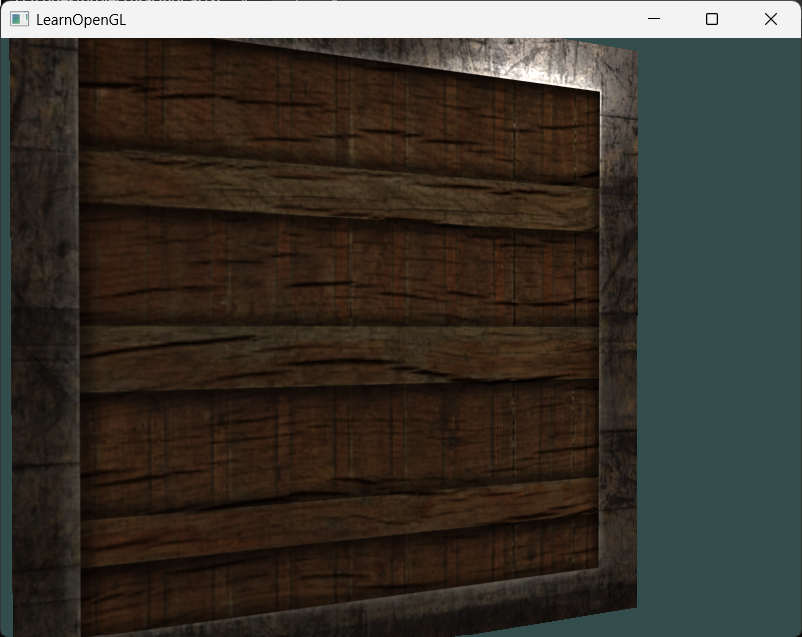
根据上面运行的结果,发现整个箱子的高光都比较强,但是实际上,箱子中间的木头部分的高光应该非常弱,金属边框的高光应该比较强。那么我们又遇到了使用漫反射贴图之前的问题,我们希望物体不同地方的高光强度不一样。所以我们引进了镜面反射贴图,他的加载和使用的逻辑和漫反射贴图一致,在片元着色器计算镜面反射光照中,从镜面反射贴图采样得到镜面反射强度,然后计算镜面反射。
#define STB_IMAGE_IMPLEMENTATION#include <glad/glad.h>#include <GLFW/glfw3.h>#include <stb_image.h>#include<iostream>#include <glm/glm.hpp>#include <glm/gtc/matrix_transform.hpp>#include <glm/gtc/type_ptr.hpp>
#include <myShader.h>#include <myCamera.h>
using namespace std;
const unsigned int SCR_WIDTH = 800;const unsigned int SCR_HEIGHT = 600;
Camera camera(glm::vec3(0.0f, 0.0f, 3.0f));bool firstMove = true;float lastX = SCR_WIDTH / 2.0f;float lastY = SCR_HEIGHT / 2.0f;float lastFrame = 0.0f, deltaTime = 0.0f;
glm::vec3 lightPos(1.2f, 1.0f, 2.0f);
void framebuffer_size_callback(GLFWwindow* window, int width, int height) { glViewport(0, 0, width, height);}void mouseMove_callback(GLFWwindow* window, double xpos, double ypos) { if (firstMove) { lastX = static_cast<float>(xpos); lastY = static_cast<float>(ypos); firstMove = false; } float xoffset = static_cast<float>(xpos) - lastX; float yoffset = lastY - static_cast<float>(ypos); lastX = static_cast<float>(xpos); lastY = static_cast<float>(ypos); camera.ProcessMouseMovement(xoffset, yoffset);}void mouse_scroll_callback(GLFWwindow* windwo, double xoffset, double yoffset) { camera.ProcessScroll(static_cast<float>(yoffset));}void processInput(GLFWwindow* window) { if (glfwGetKey(window, GLFW_KEY_ESCAPE) == GLFW_PRESS) { glfwSetWindowShouldClose(window, true); } if (glfwGetKey(window, GLFW_KEY_W) == GLFW_PRESS) { camera.ProcessKeyboard(FORWARD, deltaTime); } if (glfwGetKey(window, GLFW_KEY_S) == GLFW_PRESS) { camera.ProcessKeyboard(BACKWARD, deltaTime); } if (glfwGetKey(window, GLFW_KEY_A) == GLFW_PRESS) { camera.ProcessKeyboard(LEFT, deltaTime); } if (glfwGetKey(window, GLFW_KEY_D) == GLFW_PRESS) { camera.ProcessKeyboard(RIGHT, deltaTime); }}unsigned int loadTexture(const char* path) { unsigned int texture; glGenTextures(1, &texture); glBindTexture(GL_TEXTURE_2D, texture); glTexParameteri(GL_TEXTURE_2D, GL_TEXTURE_WRAP_S, GL_REPEAT); glTexParameteri(GL_TEXTURE_2D, GL_TEXTURE_WRAP_T, GL_REPEAT); glTexParameteri(GL_TEXTURE_2D, GL_TEXTURE_MIN_FILTER, GL_LINEAR_MIPMAP_LINEAR); glTexParameteri(GL_TEXTURE_2D, GL_TEXTURE_MAG_FILTER, GL_LINEAR);
int width, height, nrChannels; stbi_set_flip_vertically_on_load(true); unsigned char* data = stbi_load(path, &width, &height, &nrChannels, 0); if (data) { GLenum format; if (nrChannels == 1) { format = GL_RED; } else if (nrChannels == 3) { format = GL_RGB; } else if (nrChannels == 4) { format = GL_RGBA; } glTexImage2D(GL_TEXTURE_2D, 0, format, width, height, 0, format, GL_UNSIGNED_BYTE, data); glGenerateMipmap(GL_TEXTURE_2D); } else { cout << "Failed to load texture" << endl; } stbi_image_free(data); return texture;}
int main() { glfwInit(); glfwWindowHint(GLFW_CONTEXT_VERSION_MAJOR, 3); glfwWindowHint(GLFW_CONTEXT_VERSION_MINOR, 3); glfwWindowHint(GLFW_OPENGL_PROFILE, GLFW_OPENGL_CORE_PROFILE);
GLFWwindow* window = glfwCreateWindow(SCR_WIDTH, SCR_HEIGHT, "LearnOpenGL", NULL, NULL); if (window == NULL) { cout << "Failed to create window" << endl; glfwTerminate(); return -1; } glfwMakeContextCurrent(window); glfwSetFramebufferSizeCallback(window, framebuffer_size_callback); glfwSetInputMode(window, GLFW_CURSOR, GLFW_CURSOR_DISABLED); glfwSetCursorPosCallback(window, mouseMove_callback); glfwSetScrollCallback(window, mouse_scroll_callback);
if (!gladLoadGLLoader((GLADloadproc)glfwGetProcAddress)) { cout << "Failed to load GLAD" << endl; glfwTerminate(); return -1; } glEnable(GL_DEPTH_TEST);
float vertices[] = { // positions // normals // texture coords -0.5f, -0.5f, -0.5f, 0.0f, 0.0f, -1.0f, 0.0f, 0.0f, 0.5f, -0.5f, -0.5f, 0.0f, 0.0f, -1.0f, 1.0f, 0.0f, 0.5f, 0.5f, -0.5f, 0.0f, 0.0f, -1.0f, 1.0f, 1.0f, 0.5f, 0.5f, -0.5f, 0.0f, 0.0f, -1.0f, 1.0f, 1.0f, -0.5f, 0.5f, -0.5f, 0.0f, 0.0f, -1.0f, 0.0f, 1.0f, -0.5f, -0.5f, -0.5f, 0.0f, 0.0f, -1.0f, 0.0f, 0.0f,
-0.5f, -0.5f, 0.5f, 0.0f, 0.0f, 1.0f, 0.0f, 0.0f, 0.5f, -0.5f, 0.5f, 0.0f, 0.0f, 1.0f, 1.0f, 0.0f, 0.5f, 0.5f, 0.5f, 0.0f, 0.0f, 1.0f, 1.0f, 1.0f, 0.5f, 0.5f, 0.5f, 0.0f, 0.0f, 1.0f, 1.0f, 1.0f, -0.5f, 0.5f, 0.5f, 0.0f, 0.0f, 1.0f, 0.0f, 1.0f, -0.5f, -0.5f, 0.5f, 0.0f, 0.0f, 1.0f, 0.0f, 0.0f,
-0.5f, 0.5f, 0.5f, -1.0f, 0.0f, 0.0f, 1.0f, 0.0f, -0.5f, 0.5f, -0.5f, -1.0f, 0.0f, 0.0f, 1.0f, 1.0f, -0.5f, -0.5f, -0.5f, -1.0f, 0.0f, 0.0f, 0.0f, 1.0f, -0.5f, -0.5f, -0.5f, -1.0f, 0.0f, 0.0f, 0.0f, 1.0f, -0.5f, -0.5f, 0.5f, -1.0f, 0.0f, 0.0f, 0.0f, 0.0f, -0.5f, 0.5f, 0.5f, -1.0f, 0.0f, 0.0f, 1.0f, 0.0f,
0.5f, 0.5f, 0.5f, 1.0f, 0.0f, 0.0f, 1.0f, 0.0f, 0.5f, 0.5f, -0.5f, 1.0f, 0.0f, 0.0f, 1.0f, 1.0f, 0.5f, -0.5f, -0.5f, 1.0f, 0.0f, 0.0f, 0.0f, 1.0f, 0.5f, -0.5f, -0.5f, 1.0f, 0.0f, 0.0f, 0.0f, 1.0f, 0.5f, -0.5f, 0.5f, 1.0f, 0.0f, 0.0f, 0.0f, 0.0f, 0.5f, 0.5f, 0.5f, 1.0f, 0.0f, 0.0f, 1.0f, 0.0f,
-0.5f, -0.5f, -0.5f, 0.0f, -1.0f, 0.0f, 0.0f, 1.0f, 0.5f, -0.5f, -0.5f, 0.0f, -1.0f, 0.0f, 1.0f, 1.0f, 0.5f, -0.5f, 0.5f, 0.0f, -1.0f, 0.0f, 1.0f, 0.0f, 0.5f, -0.5f, 0.5f, 0.0f, -1.0f, 0.0f, 1.0f, 0.0f, -0.5f, -0.5f, 0.5f, 0.0f, -1.0f, 0.0f, 0.0f, 0.0f, -0.5f, -0.5f, -0.5f, 0.0f, -1.0f, 0.0f, 0.0f, 1.0f,
-0.5f, 0.5f, -0.5f, 0.0f, 1.0f, 0.0f, 0.0f, 1.0f, 0.5f, 0.5f, -0.5f, 0.0f, 1.0f, 0.0f, 1.0f, 1.0f, 0.5f, 0.5f, 0.5f, 0.0f, 1.0f, 0.0f, 1.0f, 0.0f, 0.5f, 0.5f, 0.5f, 0.0f, 1.0f, 0.0f, 1.0f, 0.0f, -0.5f, 0.5f, 0.5f, 0.0f, 1.0f, 0.0f, 0.0f, 0.0f, -0.5f, 0.5f, -0.5f, 0.0f, 1.0f, 0.0f, 0.0f, 1.0f };
unsigned int VBO, VAO; //处理被照物体的顶点属性 glGenVertexArrays(1, &VAO); glGenBuffers(1, &VBO); glBindVertexArray(VAO); glBindBuffer(GL_ARRAY_BUFFER, VBO); glBufferData(GL_ARRAY_BUFFER, sizeof(vertices), vertices, GL_STATIC_DRAW); glVertexAttribPointer(0, 3, GL_FLOAT, GL_FALSE, 8 * sizeof(float), (void*)0); glEnableVertexAttribArray(0); glVertexAttribPointer(1, 3, GL_FLOAT, GL_FALSE, 8 * sizeof(float), (void*)(3 * sizeof(float))); glEnableVertexAttribArray(1); glVertexAttribPointer(2, 2, GL_FLOAT, GL_FALSE, 8 * sizeof(float), (void*)(6 * sizeof(float))); glEnableVertexAttribArray(2); glBindVertexArray(0);
//处理灯的顶点属性 unsigned int lightVAO; glGenVertexArrays(1, &lightVAO); glBindVertexArray(lightVAO); //二者共用一份VBO,不需要再创建,只需绑定 glBindBuffer(GL_ARRAY_BUFFER, VBO);//告诉lightVAO从哪里读取顶点数据 //也不需要传递顶点数据,因为灯和被照物体共用一份顶点数据,已经在处理物体时传递过了 //设置读取规则 glVertexAttribPointer(0, 3, GL_FLOAT, GL_FALSE, 8 * sizeof(float),(void*)0); glEnableVertexAttribArray(0); glBindVertexArray(0);
unsigned int diffuseMap = loadTexture("resources/lighting_maps/container2.png"); unsigned int specularMap = loadTexture("resources/lighting_maps/container2_specular.png");
//物体的着色器 Shader ourShader("src/Shader/vertexShader.txt", "src/Shader/fragmentShader.txt"); //光源的着色器 //如果共用一个片元着色器,修改物体颜色将会修改光源颜色,这并不是我们想要的 Shader lightShader("src/Shader/vertexShader.txt", "src/Shader/lightFragmentShader.txt");
ourShader.use(); //设置物体运行时不需要改变的uniform变量值 ourShader.setInt("material.diffuse", 0); ourShader.setInt("material.specular", 1); ourShader.setFloat("material.shininess", 64.0f);
ourShader.setVec3("light.ambient", glm::vec3(0.2f)); ourShader.setVec3("light.diffuse", glm::vec3(0.5f)); ourShader.setVec3("light.specular", glm::vec3(1.0f));
while (!glfwWindowShouldClose(window)) { float currentFrame = static_cast<float>(glfwGetTime()); deltaTime = currentFrame - lastFrame; lastFrame = currentFrame; processInput(window); glClearColor(0.2f, 0.3f, 0.3f, 1.0f); glClear(GL_COLOR_BUFFER_BIT|GL_DEPTH_BUFFER_BIT);
//绘制物体 ourShader.use(); glBindVertexArray(VAO);
glm::mat4 model; ourShader.setMatrix("model", model); glm::mat4 view; view = camera.GetCameraView(); ourShader.setMatrix("view", view); glm::mat4 project; project = glm::perspective(glm::radians(camera.Zoom), (float)SCR_WIDTH / (float)SCR_HEIGHT, 0.1f, 100.0f); ourShader.setMatrix("project", project);
//传递物体运行时需要更新的uniform变量 ourShader.setVec3("viewPos", camera.Position); ourShader.setVec3("light.lightPos", lightPos);
//绘制贴图 glActiveTexture(GL_TEXTURE0); glBindTexture(GL_TEXTURE_2D, diffuseMap);//设置绘制当前物体所需的纹理 glActiveTexture(GL_TEXTURE1); glBindTexture(GL_TEXTURE_2D, specularMap);
glDrawArrays(GL_TRIANGLES, 0, 36);
//绘制灯 lightShader.use(); glBindVertexArray(lightVAO); model = glm::mat4(); model = glm::translate(model, lightPos);//把光源变换到新的位置。看样子我好像在旋转光源,但实际上是计算光源新的位置,然后把光源平移到这个圆形轨道上 model = glm::scale(model, glm::vec3(0.2f)); lightShader.setMatrix("model", model); lightShader.setMatrix("view", view); lightShader.setMatrix("project", project); glDrawArrays(GL_TRIANGLES, 0, 36);
glfwSwapBuffers(window); glfwPollEvents(); } glDeleteVertexArrays(1, &VAO); glDeleteVertexArrays(1, &lightVAO); glDeleteBuffers(1, &VBO); glfwTerminate(); return 0;}//fragmentShader#version 330 corestruct Material{ sampler2D diffuse; sampler2D specular; float shininess;};struct Light{ vec3 lightPos; vec3 ambient; vec3 diffuse; vec3 specular;};in vec3 worldPos;in vec3 normal;in vec2 Texcoords;uniform Material material;uniform Light light;uniform vec3 viewPos;out vec4 FragColor;void main(){ vec3 ambient = light.ambient*texture(material.diffuse,Texcoords).rgb;
vec3 worldNormal=normalize(normal); vec3 worldLightDir=normalize(light.lightPos-worldPos); float diff=max(dot(worldNormal,worldLightDir),0.0); vec3 diffuse=diff*texture(material.diffuse,Texcoords).rgb*light.diffuse;
vec3 worldViewDir=normalize(viewPos-worldPos); vec3 reflectDir=reflect(-worldLightDir,worldNormal); float spec=pow(max(dot(worldViewDir,reflectDir),0.0),material.shininess); vec3 specular=spec*texture(material.specular,Texcoords).rgb*light.specular;
FragColor = vec4(ambient+diffuse+specular,1.0);}homework1
调整光源的环境光、漫反射和镜面光向量,看看它们如何影响箱子的视觉输出。 测试:增大或减小环境光,整个箱子各个地方都均匀的增大/减小亮度;增大或减小漫反射,亮度增加/减小没有环境光明显,且明暗对比比改变环境光更为明显;增大或减小镜面光,高光的亮度和范围都增大/减小。
homework2
尝试在片段着色器中反转镜面光贴图的颜色值,让木头显示镜面高光而钢制边缘不反光(由于钢制边缘中有一些裂缝,边缘仍会显示一些镜面高光,虽然强度会小很多)。
思路:在片元着色器中对采样结果的颜色值进行1-反转(texture输出的颜色值在[0-1]之间,反转则是1-)
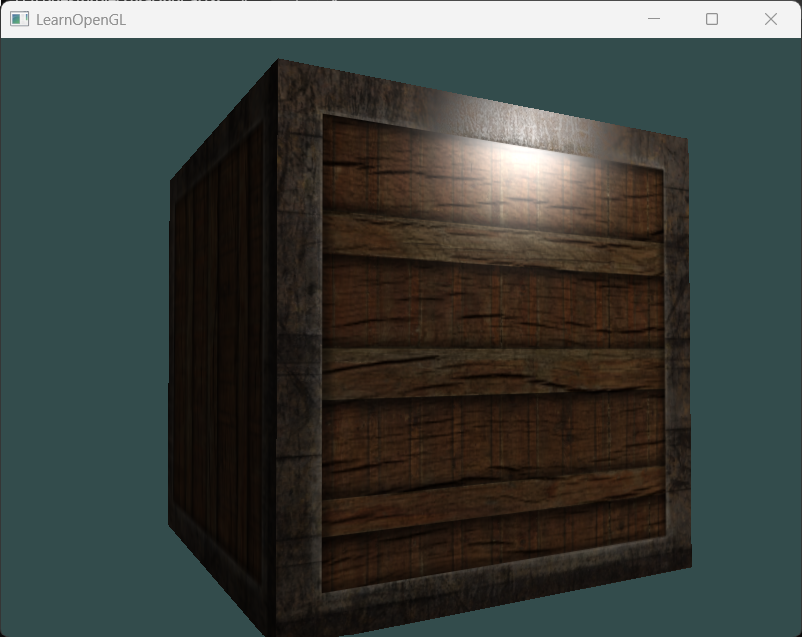
//fragmentShadervec3 specular=spec*(vec3(1.0)-texture(material.specular,Texcoords).rgb)*light.specular;箱子中部很亮,金属边框几乎没有高光。
homework3
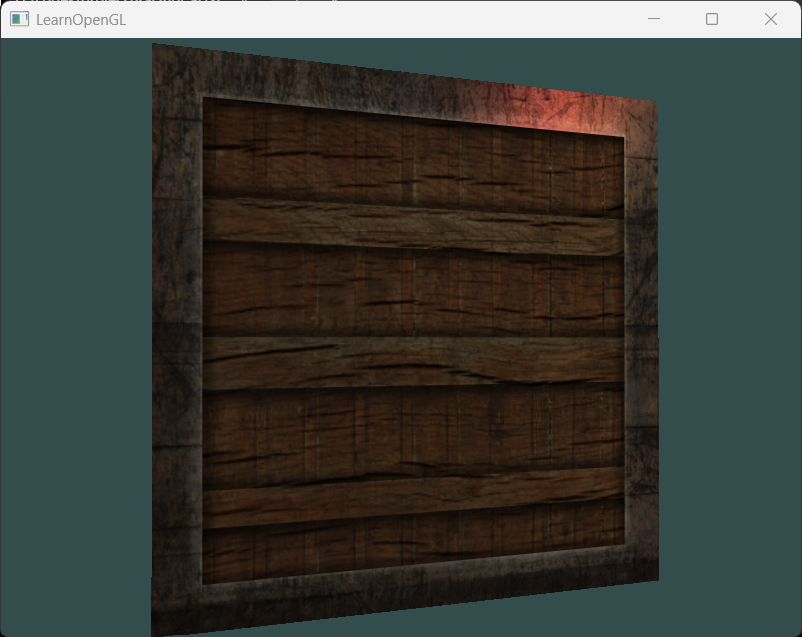
使用漫反射贴图创建一个彩色而不是黑白的镜面光贴图,看看结果看起来并不是那么真实了。如果你不会生成的话,可以使用这张彩色的镜面光贴图。
思路:直接替换镜面反射贴图。
homework4
添加一个叫做放射光贴图(Emission Map)的东西,它是一个储存了每个片段的发光值(Emission Value)的贴图。发光值是一个包含(假设)光源的物体发光(Emit)时可能显现的颜色,这样的话物体就能够忽略光照条件进行发光(Glow)。游戏中某个物体在发光的时候,你通常看到的就是放射光贴图(比如 机器人的眼,或是箱子上的灯带)。将这个纹理(作者为 creativesam)作为放射光贴图添加到箱子上,产生这些字母都在发光的效果.
思路:新增自发光贴图的加载、使用逻辑,然后在片元着色器中,新增自发光分量,从自发光贴图中采样。
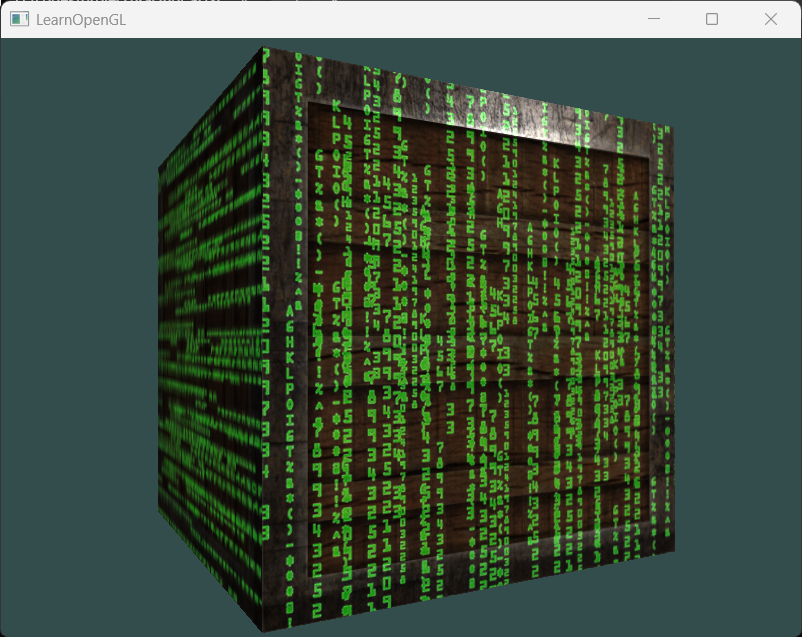
unsigned int diffuseMap = loadTexture("resources/lighting_maps/container2.png");unsigned int specularMap = loadTexture("resources/lighting_maps/container2_specular.png");unsigned int emissiveMap = loadTexture("resources/lighting_maps/matrix.jpg");
//物体的着色器Shader ourShader("src/Shader/vertexShader.txt", "src/Shader/fragmentShader.txt");//光源的着色器//如果共用一个片元着色器,修改物体颜色将会修改光源颜色,这并不是我们想要的Shader lightShader("src/Shader/vertexShader.txt", "src/Shader/lightFragmentShader.txt");
ourShader.use();//设置物体运行时不需要改变的uniform变量值ourShader.setInt("material.diffuse", 0);ourShader.setInt("material.specular", 1);ourShader.setFloat("material.shininess", 64.0f);ourShader.setInt("material.emissive", 2);
ourShader.setVec3("light.ambient", glm::vec3(0.2f));ourShader.setVec3("light.diffuse", glm::vec3(0.5f));ourShader.setVec3("light.specular", glm::vec3(1.0f));
while (!glfwWindowShouldClose(window)) { float currentFrame = static_cast<float>(glfwGetTime()); deltaTime = currentFrame - lastFrame; lastFrame = currentFrame; processInput(window); glClearColor(0.2f, 0.3f, 0.3f, 1.0f); glClear(GL_COLOR_BUFFER_BIT|GL_DEPTH_BUFFER_BIT);
//绘制物体 ourShader.use(); glBindVertexArray(VAO);
glm::mat4 model; ourShader.setMatrix("model", model); glm::mat4 view; view = camera.GetCameraView(); ourShader.setMatrix("view", view); glm::mat4 project; project = glm::perspective(glm::radians(camera.Zoom), (float)SCR_WIDTH / (float)SCR_HEIGHT, 0.1f, 100.0f); ourShader.setMatrix("project", project);
//传递物体运行时需要更新的uniform变量 ourShader.setVec3("viewPos", camera.Position); ourShader.setVec3("light.lightPos", lightPos);
//绘制贴图 glActiveTexture(GL_TEXTURE0); glBindTexture(GL_TEXTURE_2D, diffuseMap);//设置绘制当前物体所需的纹理 glActiveTexture(GL_TEXTURE1); glBindTexture(GL_TEXTURE_2D, specularMap); glActiveTexture(GL_TEXTURE2); glBindTexture(GL_TEXTURE_2D, emissiveMap);
glDrawArrays(GL_TRIANGLES, 0, 36);
//绘制灯 lightShader.use(); glBindVertexArray(lightVAO); model = glm::mat4(); model = glm::translate(model, lightPos);//把光源变换到新的位置。看样子我好像在旋转光源,但实际上是计算光源新的位置,然后把光源平移到这个圆形轨道上 model = glm::scale(model, glm::vec3(0.2f)); lightShader.setMatrix("model", model); lightShader.setMatrix("view", view); lightShader.setMatrix("project", project); glDrawArrays(GL_TRIANGLES, 0, 36);
glfwSwapBuffers(window); glfwPollEvents();}//fragmentShader#version 330 corestruct Material{ sampler2D diffuse; sampler2D specular; sampler2D emissive; float shininess;};struct Light{ vec3 lightPos; vec3 ambient; vec3 diffuse; vec3 specular;};in vec3 worldPos;in vec3 normal;in vec2 Texcoords;uniform Material material;uniform Light light;uniform vec3 viewPos;out vec4 FragColor;void main(){ vec3 ambient = light.ambient*texture(material.diffuse,Texcoords).rgb;
vec3 worldNormal=normalize(normal); vec3 worldLightDir=normalize(light.lightPos-worldPos); float diff=max(dot(worldNormal,worldLightDir),0.0); vec3 diffuse=diff*texture(material.diffuse,Texcoords).rgb*light.diffuse;
vec3 worldViewDir=normalize(viewPos-worldPos); vec3 reflectDir=reflect(-worldLightDir,worldNormal); float spec=pow(max(dot(worldViewDir,reflectDir),0.0),material.shininess); vec3 specular=spec*texture(material.specular,Texcoords).rgb*light.specular;
vec3 emissive=texture(material.emissive,Texcoords).rgb; FragColor = vec4(ambient+diffuse+specular+emissive,1.0);}